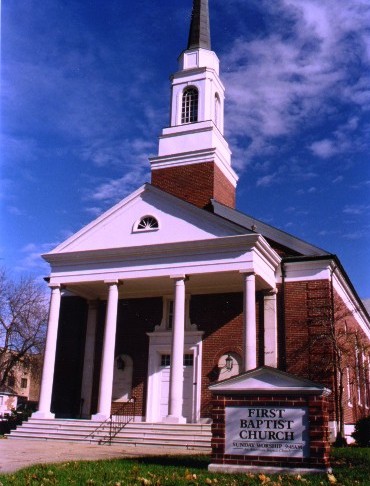
Text: Mark 10:32-52
Have you ever been in a situation where someone is being completely inappropriate for the occasion – acting in ways that just don’t fit the context?
If you had just made an error that was going to cost your company thousands of dollars, that would not be the best time to ask for a raise. It just wouldn’t.
If someone had just poured their heart out to you, shared something deep and important, that is not the time to say, “Hey, did you hear the one about the priest, the rabbi, and the Baptist pastor?” I mean, timing matters.
In our scripture today, two of Jesus’ closest friends and followers show themselves to not only be somewhat clueless, but they have an absolutely terrible sense of timing.
Our text today has three parts. First, as Jesus and the disciples travel toward Jerusalem, Jesus speaks about what is to come. “The Son of Man will be arrested and condemned to death… they will mock him and spit on him and flog him and kill him, and after three days he will rise again.”
This is the third time Jesus has spoken of his coming suffering. It is hard to imagine a more intense conversation. This is deadly serious – literally. The disciples may have been confused, upset, unsure. The may have been in denial. Or maybe they chalked it up to another of Jesus’ hard to understand teachings. But regardless, this was serious stuff.
Jesus predicts his death, and how do James and John respond? “Hey Jesus, we want you to do whatever we ask of you.” Are you serious? This is what they say in response?
Jesus, with an immense amount of patience and forbearance, I’m picturing this as maybe with a deep sigh, says to them, “What is it you want me to do for you?”
What James and John want is power. Honor. When Jesus gets to be king, they want to bask in the glory. They want to sit at his right and left. They want places of honor.
Where we sit can matter. Iowa’s women’s basketball team with Caitlin Clark has been selling out arenas all season. And with sellouts, ticket prices go up. For the game in Iowa City where she broke the women’s college scoring record, resale tickets started at $350-400. That was for far away seats – for really good seats, the price was a lot higher.
I went to the Final Four one year. It was at what was then the RCA Dome in Indianapolis, a football stadium. We sat in the upper deck, so far away that we watched these little ants on the court playing basketball. It was a great experience, but better seats would have been nice.
When you come to church, where do you sit? The same place every week? Do you look for a spot where the sun isn’t too bright? Do you look for a seat where you can get a decent view of the preacher? Or more likely, are you looking for an obstructed view? In our sanctuary, what would be considered the seats of honor – in the front, or in the back?
Where we sit matters, and James and John understood this. For them, the seating chart was important. Where a person sat was a matter of prestige. A person’s seat could reveal greatness. And so they sought the best seats, at Jesus’ right and left.
Their request is hard to believe. Three times now, Jesus has spoken of his death. He keeps on saying that things will be turned upside down, that the first will be last and the last will be first. He has already redirected the disciples concerning their desire for greatness, telling them that to save their lives they must lose them. He has told them they must become like children in order to enter the kingdom. Yet the disciples still don’t get it. They still cannot get it in their heads that Jesus’ kingdom is different.
Do you remember another occasion when the Bible speaks of two as being at Jesus right and his left? I recall that two criminals were crucified with him, one on his right and one on his left. To go where Jesus was going, to be near Jesus, is to know suffering.
Jesus replies to their request: ‘The cup that I drink you will drink; and with the baptism with which I am baptized, you will be baptized; but to sit at my right hand or at my left is not mine to grant, but it is for those for whom it has been prepared.’ With love, Jesus is saying to them that they will get what they are asking for, at least in part – but they still do not understand what they were asking for.
Not surprisingly, the other disciples are not happy with James and John. To be honest, it’s hard to tell whether they are angry because James and John are such jerks for asking this, or if they are angry that they did not think to ask first.
Jesus reiterates what it means to follow, spells it out yet again: “whoever wishes to become great among you must be your servant, and whoever wishes to be first among you must be slave of all. For the Son of Man came not to be served but to serve, and to give his life a ransom for many.’
Jesus has been saying this over and over, in various ways, and the disciples still have a hard time getting it. And it’s not just the Twelve; it’s not just followers who were with Jesus then. We have to admit that we can have a hard time with this. There is a reason that for a lot of people, a person who serves others and cares about the needs of others is not the first thing that comes to mind when they hear the word “Christian.”
The narrative continues and Jesus and the disciples come to Jericho. They travel through the town and as they are leaving along with the large crowd heading to Jerusalem for Passover, they come upon a man who is blind. He is begging along the side of the road.
Bartimaeus is there, outside the city gates. He lives off the pity and generosity of strangers. It’s a hard way to make a living.
Bartimaeus hears all of the commotion about Jesus, and he starts to cry out: “Jesus, Son of David, have mercy on me!”
What an embarrassment. Jesus is with a large crowd of people. He’s an important person. And this blind beggar, with no sense of propriety at all, starts yelling out, “Jesus, Son of David, have mercy on me!”
The way we might react is to just ignore the person and keep on walking. Don’t look at them, don’t acknowledge them, pretend they’re not there.
The disciples had a different approach: they told Bartimaeus to be quiet. You’re being inappropriate, you’re causing a scene, just shut up.
But as much as they tried to hush Bartimaeus, he just kept yelling all the louder. “Jesus, Son of David, have mercy on me!” The crowd tried to shut him up, but Jesus called for Bartimaeus to come to him.
And interestingly, the crowd made a 180° turn. “Hey, it’s your lucky day! Jesus wants to see you! Get up!”
Bartimaeus is desperate enough to call out over the crowd. He throws aside his cloak and goes to Jesus. His throwing aside his cloak is significant. Beggars laid out their cloaks by the road, and passersby would toss money onto the cloak. This was his livelihood, his security, and he tosses it aside to go to Jesus.
And Jesus asks Bartimaeus the very same question he asked James and John.
What a question. “What do you want me to do for you?” It could be a pretty compelling spiritual exercise for us to imagine Jesus coming to us and asking, “What do you want me to do for you?” It is a tender question. It is a deep question. How would you answer?
And what if Jesus showed up this morning and asked of us as a church, “What do you want me to do for you?” If we seriously pondered this question, it could change things.
Jesus asks Blind Bartimaeus, “What do you want me to do for you?’ We might think that the answer is obvious. But not necessarily. Perhaps Bartimaeus doesn’t really want to see. Maybe the darkness is better. To be able to see would change everything. There would be no turning back. Everything would be different.
He would have to live somewhere else. He would have to find a new way to make a living. It would be new territory. It would be unfamiliar. It would involve tremendous change, and that can be scary.
I’ve known people who have lost their sight and would dearly love to be able to see again. I’ve known people who are terribly frustrated that they can no longer see. But not everyone is like that. Annie Dillard, in her book Teaching Stones to Talk, reports that there are those who recover from blindness and are so disoriented that they would prefer to go back to being blind. The change is just too much.
Bartimaeus had been begging - for alms, for food, for anything which might get him through another day. But that is not what he asks for. He knows his deeper need. He stood and threw off his cloak and he went to Jesus and said, “Teacher, let me see again.”
And Jesus said, “Go, your faith has made you well.” And the man “immediately” regained his sight and “followed Jesus on the way,” the text says. Some whom Jesus healed, he told to go back to their homes. Jesus said to this man, “Go your way.” But this man followed Jesus on his way.
Mark 10 is a really interesting chapter. Jesus is teaching, healing, proclaiming the kingdom of God, but nobody quite gets it. The Pharisees -- religious leaders -- only want to see Jesus fail. His own disciples try to keep children away from him and get scolded, and they seem puzzled by his teaching.
The disciples have been following Jesus for close to three years. They have received his teaching, they have witnessed his miracles, they themselves have gone out to preach and to heal. And when Jesus asks two of his closest disciples what they want him to do for them, they say, “We want to sit at your right and left.”
And then there is Bartimaeus. He may have been blind, but amazingly, he is the one with real vision--the only one who really sees Jesus.
Jesus tells Bartimaeus that he is healed and he can go live his life. And for Bartimaeus, to go on living his life means following Jesus – as though now that is the only life he can imagine living.
In Mark’s gospel, this is the last healing that Jesus performs. We have rea about several of these healings over the past weeks. And of all the people Jesus heals, Bartimaeus is the only one known by name. I think that maybe that is tied to the fact that he followed Jesus.
I wonder if years later, when Mark wrote his gospel, people said, “You know old Bartimaeus, the Sunday School teacher over at First Baptist? Years ago, he was blind, and he was healed by Jesus.”
I know that many of us have some issues with our vision. I used to wear contact lenses until they really didn’t do the job, and now I’ve had bifocals for several years. Some of us can see better than others.
But there is more than one kind of vision. There is seeing and then there is seeing. And we all have our spiritual blind spots.
Who do we not see? Do we see people like Bartimaeus? Do we see people who are different than us? Do we see the good in others, or only look for faults?
Do we try to push others aside or put others down in our quest to be Jesus’ favorites, or do we look in the mirror and see a beloved child of God – and go out to live with care for all of God’s children?
May it be so. Amen.
Saturday, February 24, 2024
“Seeing and Really Seeing” - February 25, 2024


Saturday, November 25, 2023
“A Dark Love Song, A Hopeful Future” - November 26, 2023
Text: Isaiah 5:1-7, 11:1-5
I know that a number of you are gardeners. How many had a vegetable garden this year – even if it was just a couple of plants? Even if you just used containers? How many had a flower garden?
We just had a couple of tomato plants and some basil and cilantro. We won’t talk about the basil and cilantro, but the tomatoes really produced. We still have a few green tomatoes that we brought in before we had a hard freeze. That was a few weeks ago if you remember. We have had a lot of 60 degree days, even a few 70 degree days since then. So that’s been a while, and those green tomatoes are still ripening on the counter.
But we have had plenty of years when things did not go so well. A number of years ago we had raspberries – I got some starter canes, as they are called, from Michael and Jill Leininger. It took a year or two, but they did pretty well for a few seasons, and the raspberries were delicious. And then the yields were less and less until they hardly produced. I mean, I was eating a few berries on the spot, as I picked them, and that was it – there weren’t any to put on my cereal, much less make a cobbler.
Growing things can take some work. Our first scripture this morning is about a vineyard. The owner takes great pains to prepare the vineyard for the best possible grapes. It was planted on fertile ground, on a hill. He cleared the ground of stones. We can read that and think oh yeah, good idea, but this is serious labor. Has anybody dug up stones out of a field? I personally would not sign up for it. Those stones may have been used for the wall surrounding the vineyard. The vineyard owner planted choice vines. He didn’t just pick up what they had on clearance at Wal-Mart, these were quality vines that would produce grapes for fine wine.
The vineyard owner really goes above and beyond. There was a wall around the vineyard and there was a hedge. That is even more planting. And a watch tower is built so that the vineyard could be observed. Presumably this was to look out for animals who wanted to eat the fruit or mess with the vineyard as well as individuals who might be up to no good - as well as to just get a look at the whole vineyard. (The watchtower was necessary because they had not invented drones yet.)
So I hope you have the picture: a great deal of planning and preparation and lots of hard work went into readying and planting and caring for this vineyard. And the end result, the goal of all this, was not simply the grapes, but to produce wine. Before there were even any grapes, a wine press is built. Remember that this was long before refrigeration. Oil and grain and wine were important commodities – other than what could be sold locally, these were the ways that what was grown were stored and traded.
It is a beautiful picture. You can just imagine that vineyard on a hill, a winery in the making; maybe there were plans for a little café on site.
Has anybody grown grapes? I am told that it takes a few years, maybe even 4 or 5 years for vines to really produce grapes. It just takes time.
So the vineyard owner has invested not only a great deal of effort and financial resources; he has invested time. He has put so much into this vineyard, and it will be a few years before he even sees and yield.
In time, the vines produced. I’m sure it was exciting that first year that the vines started putting on grapes. I’m sure everyone was looking forward to the harvest.
There was so much anticipation, but then when they finally tasted the grapes, they were awful. They were sour. They weren’t fit to eat.
The vineyard owner decided to cut his losses. These vines produced wild grapes and they were good for nothing. He doesn’t outright destroy the vineyard, but basically says, "I’m done here." He removed the hedge, removes the wall, and essentially lets nature take its course. The vineyard becomes overgrown, there are briars and thistles, wildlife invade, and it’s done for.
The vineyard is a metaphor for the nation of Israel. We are told that it is a love song - at least that is how it begins. God loves the house of Israel and has taken great effort to care for it. The purpose of the vineyard was not just to produce grapes, but wine. Wine is often a symbol of the good life – of joy and contentment and celebration and fellowship. But Israel has not produced fruit of justice and righteousness. That is the fruit God intended, those were the grapes that were expected.
Now it is not that there were no grapes. It’s not like my raspberries that stopped producing so well. The grape vines produced, but the grapes weren’t any good. They tasted awful. And so the vineyard was useless.
I went to the grocery a couple of weeks ago and Susan put grapes on the list. I saw some that looked OK and the price wasn’t bad so I got some grapes. I brought them home – and they hardly had any taste. They were not what anybody would have in mind when they want grapes.
Our translation says that God “expected justice but saw bloodshed, expected righteousness but heard a cry.” There is actually a play on words in the Hebrew. God expected mishpat (justice) but got mishpach (perverted justice), God expected tsedaqah (righteousness) and got tse’aqah (a scream).
The Hebrew pun is hard to replicate in English. Maybe God expected justice but got “just us” – as in a complete disregard for others. Robert Alter tries to capture that Hebrew play on words and translates this as “He hoped for justice and, look, jaundice, for righteousness and, look, wretchedness.”
Israel was not producing the wine of justice and goodness and compassion. They may have thought they were doing justice; they may have thought they were righteous, but it was a perverted justice and a false righteousness.
We can say all the right things. We can put on an air of niceness. Now don’t get me wrong, I prefer that to an air of meanness, but true justice is seen in the way we act. It is seen in our living and it is seen in the way we demonstrate our values. The nation of Judah was falling far short, talking justice but neglecting the poor and the widow and the stranger.
Rosalynn Carter died this past week. To me, she is an example of someone whose life reflected a true concern for justice. You probably remember those images of Rosalynn alongside Jimmy, swinging a hammer working on building a Habitat for Humanity House.
Rosalyn was an equal partner with Jimmy in founding the Carter Center after Jimmy left office. Through the Carter Center, she continued her long advocacy for people with mental illness, working to combat stigma and discrimination and to promote better mental health care in the United States and abroad.
She helped campaign to end guinea worm disease, a terrible tropical disease that has now nearly been eradicated.
And she saw how being a caregiver to others can take a toll. She founded the Rosalyn Carter Center for Caregivers to support those who selflessly cared for others. She said that “there are only four kinds of people in this world: those who have been caregivers, those who are currently caregivers, those who will be caregivers and those who will need caregivers.”
President Jimmy Carter was instrumental in founding the New Baptist Covenant in 2007. It was an effort to bring together diverse Baptist groups, especially both predominantly white and black Baptist denominations, to work together especially around issues of justice. Several of us were there at that first gathering in Atlanta – I remember Wayne and Irene Shireman and Bob and Jenna McCarley and Jere Maddux and Michael Thompson and myself, along with Jimmy and Rosalynn Carter. Working for justice, trying to make a difference. Mrs. Carter said, “Do what you can to show you care about others, and you will make our world a better place.”
Now I am not trying to do a eulogy for Rosalynn Carter, but it just struck me this week that she was about producing good fruit, fruit of the spirit. Isaiah prophesied in a time when Israel was failing to produce goodness and justice and righteousness. And it led to a bleak future.
This is purportedly a love song, but it is a pretty dark love song. Fortunately it is not the end of the story. We continued reading in Isaiah with chapter 11. This is a familiar passage – often an Advent text. Advent begins next Sunday so we are getting a little bit of a head start here.
We first read about a vineyard that was overrun. There was destruction, and indeed the metaphor was accurate: the temple in Jerusalem was eventually destroyed and the nation of Judah taken into captivity in Babylon.
But that was not the end of the story. From the stump of Jesse, a shoot would grow. A branch would grow from the roots.
We also know what that is like. We have a pagoda dogwood in our backyard. It is a small multi-stem tree – it had 3 trunks. I say had because the largest of the three was injured and starting to die. It had to be cut off. But a new shoot started to grow from the roots, and today that new shoot is the tallest of the three trunks.
The nation of Israel was a mess, and the future looked bleak. The turn away from justice brought disastrous consequences. But that was not the end of the story.
Isaiah foresees a new leader, a shoot from the stump of Jesse. Jesse was the father of King David, so this would be someone in the line of David. He would rule with justice and equity. He would have a spirit of wisdom and understanding and counsel and power and defend the poor and the humble.
When things look bleak, when we are discouraging and despairing, it is hard to see light. It is hard to hold onto hope. But those despairing moments are not the whole picture. They are not the complete story. And the future is not set in stone. There are possibilities. There can be wonderful possibilities. Things can be different. Things can be better. Things can be made right. The life we long for and the world we long for are possible.
I know, this can sound naïve. Sometimes it can look like the world in a going to hell in a handbasket, and I can be discouraged as well as the next person. But in the midst of a desperate time, Isaiah holds out the possibility, holds out the vision of a just and peaceful future, and that vision is as needed today as it was then.
Having dreams and visions, seeing another way, can be a counter-cultural act of defiance. The conventional wisdom may be that the poor may always be with us, don’t worry about it; but it is an act of defiance to believe that things can be better, that the world can be more fair, more equitable.
The conventional wisdom may be that people of different races and ethnicities and faiths cannot peacefully coexist. It is an act of defiance to live with and work with and befriend those who are different. The conventional wisdom may say it’s a dog-eat-dog world, only the strong survive, you have to look out for #1. It is an act of defiance to put other values, like compassion and love and family and making a real difference, ahead of simply “getting ahead.”
King Hezekiah was a leader to come who helped to restore, at least for a time, a commitment to justice in the nation of Judah. That commitment did not outlive his reign. But ultimately, we believe this prophecy was fulfilled in Jesus, born in the line of Jesse, who brought hope and showed us the way to peace and justice and righteousness.
How do we tap into that? Jesus showed us the way. He said, “I am the vine and you are the branches.” As we stay connected to Jesus and as we follow in the way of Jesus, we are led to peace and hope and love. And as we share that with those around us, the world becomes a little more hopeful, a little more just, and little more fair and equitable. And the vineyard starts to produce good fruit.
May it be so. Amen.
Saturday, August 12, 2023
“When God Is Silent” - August 13, 2023
Text: Psalm 13, 1 Kings 19:11-13
This summer, we have been looking at questions and topics that were suggested by the congregation. One person submitted this:
“I often think about how to be faithful and patient when God is silent. Am I praying for the right thing and in the right way?”
This is a question that at some point or other, every one of us can relate to. How do we get through those times when God is silent? When it seems like God is not there?
Silence, in the first place, is difficult for many of us. We are so used to constant sound. We are so used to talk, to chatter, to tv, to music, to muscle cars gunning their engine down the street.
I ride my bike on some of the bike paths and multi-use trails around town. When you come up behind someone walking and you are going to pass, you call out, “On your left.” It’s just common courtesy and it is a safety issue. The problem is that sometimes people have earbuds or headphones and they are playing the music so loud they are oblivious.
We are used to sound. For some of us, silence can be uncomfortable.
When it comes to silence, context can be everything. If you walk into a room where another person is sitting and no one says anything, it may be because you don’t know each other. Or it may be that you know each other so well that words are not necessary. It may be that there has been some conflict between the two of you and there is an awkward silence. It could mean that you are both too sad to speak. It might mean that you both know the room is bugged. It might be that the other person is sleeping. There are many reasons for silence.
Our dog Rudy died almost 3 months ago now, but it is still hard. And I know of several families in our church who have lost a pet just this year. One of the ongoing painful reminders of the loss is that the house is so quiet.
We live in a culture that is not especially comfortable with silence.
Quite a few years ago we had a church retreat at Dayton Oaks – some of you will remember this. We all took something called the Spiritual Type Inventory. You answer a bunch of questions and then find what your spiritual type is - you could be head, heart, mystic, or activist. It was very interesting (to me at least!), and the point was not to pigeonhole people but to think about the various ways we are wired spiritually and live out our spiritual lives.
This was part of a doctoral project I was working on. My hypothesis was that in a university-type congregation such as ours, members would tend to have a “head” spirituality – a focus on thinking and intellect and rational faith. As it turned out, we did have more people in the head group but it was a good mix. Another church in a university community had more people in the heart group and another had more in the activist group. So much for my hypothesis.
At any rate, one of the things we did was to have the head spirituality people gather in a group, and the mystics over there, and activists over there, and so forth. There were questions for each group to discuss and then we all talked about them in the larger group.
One of the questions was, “What part of the worship service is most meaningful to you?” Folks with different spiritual types might be drawn to different parts of the service. One person in the mystical group said that the time of silence after the sermon was the most meaningful part of the service to them. It was very meaningful to that person, but some in the other groups hadn’t really noticed that that was part of the service at all.
For some, silence is an opportunity to “be still and know that I am God.” For some others, silence can be uncomfortable. Some of us are moved by the quiet and the meditative nature of a Taizé service. For others, it’s just not their thing.
However we feel about silence, when it comes to God, we want a God who speaks to us. We want a God that keeps in touch.
As we think about our question this morning, we need to ask: what do we mean by God’s silence? This might mean different things to different people, but I think it can mean something like spiritual dryness – a time when we may feel far from God. It may come about in the midst of difficult circumstances. Maybe we are feeling kind of beaten down by life. Maybe we have tried to do the right thing and got nothing but grief for it. Maybe we are filled with worry for a loved one.
Or maybe we are trying to make a decision and unsure of what we should do. We may pray and pray but don’t find much of an answer. We may pray for clarity and don’t get any. And after a while, maybe we stop praying. It may feel like God isn’t there, or that God isn’t paying attention.
To think about God’s silence, we might ask about the flip side of that. What is it like when God is talkative? When God is communicating?
It is interesting the way that God speaks in the Bible. After creation, God speaks to the man and woman in the garden, just like we might speak to each other. God spoke audibly to Abraham. God spoke to Moses regularly. God spoke to the prophets. But over time, God spoke less and less directly.
When the boy Samuel was serving in the temple with the priest Eli, we read from 1 Samuel: “Now the word of the Lord was rare in those days; visions were not widespread.” Which sounds not unlike our day.
God seemed to give up audible words and went to speaking through dreams. Angels appeared less and less. And the seemed to pay less and less attention. Until finally, God spoke to a young woman named Mary. And God came to us in Jesus. He revealed who God was. He spoke God’s words. Jesus was God’s Word. He showed us how to live.
So how does God speak to us today? In a time when the Word of the Lord is rare and visions are not widespread? We do not expect to hear the audible voice of God. We do not expect the shrubbery to catch fire and begin speaking to us – we don’t expect burning bushes. We do not look for angels to appear or expect vivid and unmistakable visions.
I suppose the way God speaks is a little different for each person – maybe depending on those spiritual types – but it may be through the words of scripture – as the words we read become God’s word to us. It may come as we seek to follow Jesus, knowing that Jesus is God’s Word.
It may be through a growing conviction, a sense of what is right. It may come as we take in the beauty of God’s creation and spend time in nature. It may come through other people who help us, who encourage us, who inspire us.
Sometimes it involves taking one step forward and finding some confirmation that this is the way to go, and then taking another step. God may speak to us as we follow that part of God’s will we know to be true, as we follow the light, and we receive more light. It may come as we work for justice, work to make things right and bring healing in God’s world and we find God’s strength and power.
Or maybe we find a sign of some kind – that might be different for different folks – but some sign of God’s leading us. Sometimes we have a powerful experience of God’s presence.
Maybe none of that is happening for you. Maybe it feels like it is complete radio silence from God. If that is the case, know that you are absolutely not alone.
Many of the Psalms speak of a sense of profound sense of God’s silence. Susan read for us Psalm 13. And then we sang it. There is a reason we tend to sing happier, more joyful hymns than singing Psalm 13. But it is honest and true to our experience, just as the joy is true to our experience. There are those times when Psalm 13 describes our lives.
What does Jesus cry out from the cross? “My God, my God, why have you forsaken me?” Jesus felt God’s silence, God’s absence. When he said that, he was quoting from Psalm 22. Some would say, “Oh, he was just quoting from the Psalms.” What do you mean just quoting? There is a strength that comes from knowing that others have gone before you and that they have been there too. There is power in knowing you are not alone.
Yet after speaking of God’s silence, Psalm 13 concludes:
But I trusted in your steadfast love;
my heart shall rejoice in your salvation.
I will sing to the Lord,
because he has dealt bountifully with me.
Where does that come from? It seems to come out of nowhere. It seems like a sudden departure. But it comes from knowing that God had been there before. It comes from knowing that others had experienced this same sense of God’s silence - and yet God had always proven faithful.
Martin Marty is the dean of American church historians, a longtime professor at the University of Chicago. A group from our church went to hear him speak at Drake together with Bill Moyers – this was 22 years ago, in the aftermath of 9/11. He was already long retired even then, and today he is 95.
Years ago, after the death of his wife, he wrote a moving book reflecting on the Psalms. He said that there is a summery kind of spirituality, a spirituality of joy and praise and thanksgiving. But Marty wrote about those times when God seems silent. Roughly half of the Psalms reflect a wintry sort of spirituality. The title of that book is A Cry of Absence.
Marty wrote,
Winterless climates there may be, but winterless souls are hard to picture. A person can count on winter in January in intemperate northern climates, or in July in their southern counterparts. Near the equator, winter is unfelt. As for the heart, however, where can one escape the chill? When death comes, when absence creates pain – then anyone can anticipate the season of cold. Winter can also blow into surprising regions of the heart when it is least expected. Such frigid assaults can overtake the spirit with the persistence of an ice age, the chronic cutting of an Arctic wind.
We can all experience those times when God seems absent, when it seems like God has gone silent. We can all face those winter times of the soul – and in time, we all will.
How do we get through those times? How do we stay faithful when God is silent?
I don’t presume to have the answer. I think one of our problems is that we talk way too much, maybe to cover up the fact that we don’t have answers. I could have actually taken a number of the questions that came in for sermons this summer and preached the “I Don’t Know” sermon series.
So let me just suggest a few things.
The example from the Psalms is helpful. Even though God is silent, the Psalmist continues to cry out to God, and there is a confidence in God’s goodness and care. The Psalm actually ends with praise. So keep on praying. You can cry out to God, you can even complain to God. God can handle it. And we can depend on God’s love.
And then we can sometimes think of prayer as primarily asking for God’s blessing for ourselves and those we care about. As we grow in our understanding of prayer, we can see the larger picture that at the heart of it, prayer is not about telling God what needs to happen but building a relationship with God. And we can maybe focus our praying there.
That means that prayer is not just our talking to God, but listening to God. It may be that sometimes we can’t hear God because we are too busy talking. We read from the story from Elijah. He was fearful and running for his life. There are all kinds of pyrotechnics in Elijah’s story, but we find that the Lord was not in the mighty wind, and the Lord was not in the earthquake, and the Lord was not in the fire. The Lord was in the silence.
God may speak to us out of the silence. In the midst of the silence. But we have to listen. We have to “be still and know that I am God.”
There are those times when we are too numb with grief or too filled with pain or too distracted by the crises around us to really be able to listen. To really be able to pray. And I think that is where the community comes in.
We can pray for one another. And with one another. And when you are too hurt or too tired or too discouraged to even pray, the community can hold you up and pray for you. And when others are too hurt or too tired or too discouraged to even pray, you can pray for them.
And we can trust that in time, we will "sing to the Lord, for God has dealt bountifully with us." Amen.
Saturday, July 22, 2023
“A Scientist (?) Looks at Life from a Faith Perspective” - July 23, 2023
Text: Genesis 1:1-28, 31
On your Summer Sermon Request line, the request for today is “A favorite from the archives – for those of us who missed it the first time.”
Well, the archives go back pretty far. I could have chosen a sermon from 25 years ago, but the sermon that came to mind was more recent - it was actually from the time I asked for sermon suggestions a few years ago. Back then, the suggestion slip read “A scientist (chemist) looks at life from a faith perspective.” It was signed simply Borgen, but I knew it wasn’t from Dianne. This was Fred’s doing.
As most of you know, Fred is a psychologist and much of his professional work focused on personality and vocation. I have watched Fred countless times talking to students after the service. He was especially interested in their majors and more than that, where their lives were heading.
My undergraduate degree is in chemistry, and when Fred suggested this topic, he was really giving me more respect than I deserve. I would not describe myself as a chemist or a scientist – that’s where the question mark in the title comes from. I took Fred’s suggestion as really asking for both something about my personal experience – of the journey from chemistry to ministry, and something about the relationship between the two – between science and faith.
Gerald Kirkman was my high school chemistry teacher. He was a big athletic guy with a sharp mind and a great sense of humor. He played college football at Indiana State and was a PE major, not taking the academic side of things too seriously, until one day an assistant coach pulled him aside and said, “Kirkman, you are a decent player but you are not going to make a career of this. You are a smart guy and you need to find yourself another major.” (No offense to any PE majors out there.) That assistant football coach was also Indiana State’s head basketball coach – that’s the way things worked back then. His name was John Wooden. Yes, the John Wooden who coached UCLA to 10 NCAA basketball championships.
I can say that Johnny Wooden had an influence on my life, because Mr. Kirkman decided to become a chemistry teacher. He was a great teacher and was elected president of the National Science Teachers Association. North High School offered a second year of chemistry, Advanced Chemistry. We had to come in an hour early, before school started, to have time for the labs. Mr. Kirkman was a great guy and I loved it.
I went to college in my hometown, at Evansville, and majored in chemistry. I was president of the American Chemical Society student affiliate. I worked two summers in the research division at Mead Johnson, a pharmaceutical and nutritional manufacturer in town.
But other things were happening in my life through those years. I became involved in the Baptist Student Union and began to feel a call to ministry. And eventually that was the path I took.
I don’t think it really occurred to me that the scientific approach to life, if there is such a thing, could not mesh with a spiritual approach to life. And in fact, I felt like I was better prepared for seminary than some of the students who had gone to Christian colleges and majored in religion.
A background in chemistry helped me to think analytically. It helped me to ask questions, to consider possibilities. And if someone were so inclined I would encourage them as a pre-theology student to major in chemistry or biology or a similar field as a good preparation for seminary – and to take some psychology and sociology and religion courses along the way.
I also remember as a seminary student coming home and preaching at my home church. Sitting there in the congregation was my chemistry professor and research advisor Dr. Beckman. Some of the chemistry faculty felt like I had squandered a promising career and they kind of disowned me the spring of my senior year, after I had applied to seminary. I think this was Dr. Beckman’s way of giving her blessing on the choice I made. A progressive Presbyterian who came to hear me preach as a then-Southern Baptist seminary student, she had this sense that faith and ministry and science could all be toward the end of making for a better world.
Years later, after coming to this church, I earned a Doctor of Ministry degree at United Theological Seminary in the Twin Cities. My thesis project involved university congregations. Basically what I was doing was Sociology of Religion – a scientific approach to a question about faith communities.
It strikes me that my background is similar to many of you. I think about our church – in recent years we have we had professionals and undergraduates and grad students in agronomy, soil science, chemistry, biology, biochemistry, neuroscience, plant science, forestry, food science, nutrition, animal science, veterinary science, computer science, and other sciences – I’m sure I’m leaving somebody out - along with just all kinds of engineers. And then we have plenty of social science people in our church, including Dr. Borgen.
With all of these sciences represented, the question may be, which is the highest science? Which is the most “sciencey” science? You might think of a progression from less exact to more exact sciences – from biology to chemistry to physics to mathematics. But centuries ago, one science stood above all others. Do you know what it was? It was Theology. Theology was known as the Queen of the Sciences because it dealt with ultimate matters. And sciences – discovering natural phenomena, solving mathematical equations, working out the laws of physics – science was understood as thinking God’s thoughts after God.
Well, it has been a long time since theology has been thought of as the Queen of the Sciences. But some today go so far as to see faith and science as opposed to one another. This view comes both from secularists who see no place for matters of the spirit and from religious fundamentalists who see science as the enemy.
The Tom Troeger hymn we sang, “Praise the Source of Faith and Learning,” speaks of the way that science and faith need each other and complement each other. The hymn ends, “Blend, O God our faith and learning till they carve a single course; till they join as one, returning praise and thanks to you, the Source.”
I know that plenty of you are more qualified than me to speak on “A Scientist Looks at Life From a Faith Perspective.” (We have actual chemists here in the sanctuary and on Zoom.) I think about Bob McCarley. Bob was a chemistry professor and chair of the department at Iowa State. He also served as our moderator and trustee and Sunday School teacher here at First Baptist. Nine years ago, on the Sunday before school started, I sat with Bob and Jenna at a table during fellowship time. I remember Bob having this engaging conversation with a new student here for the first time. And then, two days later, Bob was gone.
I remember a story I told at Bob’s funeral. His family was on one of those epic family trips. They made a palette in the back of the station wagon and the four kids would lie down and go to sleep, but one was supposed to ride shotgun and keep Bob awake. One night Bob and Jenna’s daughter Kyanne was riding shotgun. It was a beautiful night, the sky was filled with stars, and Bob talked to her about his work. He described the intricacy of molecules and the beauty of the way things worked and fit together in the universe. He said that the world was so beautiful and so amazing, there had to be a higher power.
That is a chemist looking at life from a faith perspective. For Bob, science actually pointed toward faith.
His views were captured by the Psalmist who wrote, “The heavens are telling of the glory of God; and the firmament proclaims God’s handiwork.” If the ancient world had known what we know, the writer could have just as easily written, “The atoms are declaring the glory of God and the molecules proclaim God’s handiwork.”
Our bulletin cover artwork this morning is Vincent Van Gogh’s The Starry Night. It captures the wonder and awe of the stars in the sky. At its best, science and art and faith all involve wonder. Science is about being open to new possibilities. There was an article some time ago in the Des Moines Register about Parkinson’s Disease, which I took note of because of Elizabeth Stegemöller’s research. It is especially timely as RAGBRAI starts today.
Dr. Jay Alberts of the Cleveland Clinic was participating in RAGBRAI. For anybody out of town on Zoom who may be unfamiliar with RAGBRAI, it involves riding your bike across Iowa for a week along with thousands of other people and eating lots of pie. Alberts was on a tandem bike with Cathy, a Parkinson’s patient. The ride was intended to bring attention to the need for more Parkinson’s research. But Alberts and Cathy stumbled onto an important finding: Cathy’s physical abilities improved after a day of pedaling, and then improved more after another day.
Alberts knew exercise was important, but how important was driven home to him on RAGBRAI. On a tandem, Cathy was forced to go at his speed, which was significantly faster than hers. On the bike, Cathy didn’t feel as stiff. She was pedaling faster, and her brain function was better. As she wrote postcards and mailed them to her family from across Iowa, her handwriting became more legible. “It was a serendipitous discovery,” Alberts said. “Science can happen anywhere, even in the cornfields of Iowa.”
Science is about trial and error, about experimentation and observation. It is about paying attention. And it involves being willing to change your assumptions. Basically, if you are doing science right, you have to have humility.
There is something called the Heisenberg Uncertainty Principle. Heisenberg was a physicist looking at subatomic particles, and the Uncertainty Principle says that both the position and the velocity of an object cannot be measured at the same time. You can know exactly where something is, or you can know how fast it is going, but you can’t know both exactly.
I think it is awesome that science has a principle about uncertainty. Isn’t that beautiful? And my goodness, that certainly translates to faith. There is plenty that we don’t know. There is plenty we are not quite certain about. An approach of humility is essential in faith, as in science. The notion that the way I interpret the Bible, the way I understand the world, the way I think about life and about God might need to change, that the spirit might speak to me, that God might lead me in a new way, is essential to faith.
Our scripture this morning is the story of creation. God painstakingly creates the world, working all day, calling it quits for the day, looking over what had been created and calling it good. The light, the dark, the waters, the plants, the trees, the sun, the moon, the stars, fish and sea life, wild animals and cattle and creeping things of every kinds, and finally human beings. Human beings, created in the image of God. And then God said that it was very good.
It is a wonderful, powerful account of creation. It is beautiful and poetic. God takes great care with this creation and God regards it all as good. It tells us that the universe and this planet and all that is in it is created by God and loved by God. It gives us a sense of our place and our value in this world.
It would be ludicrous to read this and understand this as a 21st century science text. Instead it inspires wonder and joy and gratitude and a sense of belonging in God’s world.
Science can answer the question of how, but we need faith to answer the question of why. Science can collect data and tell us what is, but faith has something to say about what should be. And so science and faith need one another.
Faith that ignores the world out there is shallow. We need the very best scientific understanding, just as we need the guidance of spiritual understanding. When faith tries to control what is true in the realm of science, it is never a good thing. The earth is not flat and the sun does not revolve around the earth, but there were times when the Church condemned people who did not believe those things, based on its understanding of scripture.
The world of science also needs the influence of faith. We need sensitivity and concern. We need compassion and integrity toward the end of applying science to help build a better world.
I think about some of the issues this world is facing:
• Clean water and equitable water distribution
• Medicine and new therapies and bio-medical ethics
• Artificial intelligience
• Cybersecurity and information systems and privacy
• Genetics
• All kinds of public health issues
• And looming over all of these, global climate change, which exacerbates other issues like extreme weather and habitat destruction and income inequality and so much more
In each instance, science and faith need one another to address difficult issues. We don’t inhabit a world of the spirit, with another natural world out there. It is all one world. It is all God’s world. And God said that it is good.
Too much religion is concerned solely with individual salvation. Which is important - and very much a part of our Baptist tradition. We need lives committed to Jesus Christ. But when we are committed to the way of Jesus, we will be concerned about the world out there – the world that God loves.
The word religion literally means to bring back together – re–ligio (think ligaments). Re-ligamentize. Your religion is the way you make connections with God and people and the world out there – the way it all holds together. At its best, our religion brings together scientific understanding and the power and understanding of our faith as we love God, love our neighbor, and love God’s world. May it be so. Amen.

 Posts