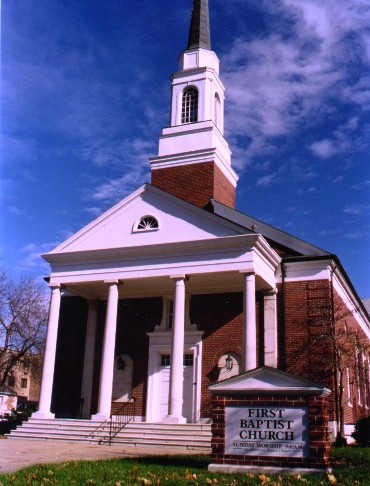
Saturday, November 26, 2011

“Happy New Year!” - November 27, 2011 (Advent 1)

Text: Isaiah 35:1-10, Romans 8:18-25

Our Old Testament lesson includes these words of the prophet Isaiah: “Be strong, and do not be afraid.”

These are words that invite us to face the future boldly, and good words to focus on as we start the New Year which begins, of course, today.  This is the first day of the year – not of the calendar year or academic year or fiscal year, but the first day of the Christian year.  The beginning of this annual cycle of praise and prayer and challenge and instruction and worship centers around Jesus’ birth, and today, the First Sunday in Advent, we begin that journey.  So at least on paper, this First Sunday in Advent would seem to be an important day.  But the reality is, it hardly gets noticed, coming right after Thanksgiving as it does, with folks in a shopping stupor and many students and others away this weekend.  And then Advent in general gets completely lost with the big run-up to Christmas and the “real” New Year.  Advent is not much in our consciousness.

You will not find Advent cards in stores.  There is no Advent display at the mall, no Advent specials on TV.  We don’t have office Advent parties.

People worry about Christmas being co-opted by the culture – well, we don’t have to worry about that with Advent.  The Church has Advent all to itself; nobody else would want it.  And so here we are this morning, as Christians have been for two thousand years, daring to face the future before us.

Christian faith is forward-looking.  At least, that is the way it is designed to be.  Now, to be sure, history is important; tradition is important.  We read the scriptures, which tell us about God’s work through history.  We remember and we celebrate the life and teachings, the death and resurrection, of Jesus.  We live out a faith that has been lived for 2000 years and we stand on the shoulders of those who have gone before us.  We look back, we remember, and this tradition and heritage, this remembering, gives us a place to stand.  We have just celebrated Thanksgiving, which asks us to look back – we look back in order to give thanks for the blessings we have enjoyed.

But our faith involves more than looking back.  The purpose of looking back is so that we can live now, so that we can move forward.  Advent is about preparing our hearts for Christmas, but at a deeper level it is about looking ahead.  It is about waiting and anticipating and turning our gaze toward the future, toward God’s promised future, with hope and imagination.

This ability to look ahead, to look to the future, can be difficult for us.  Peter Gomes, the chaplain at Harvard who died this past year and a great American Baptist preacher, said that we live under the tyranny of the past.  That may not sound right, because a lot of us think of the past as a comfort.  We talk about “the good old days,” about our “heyday,” about “glory days,” and the past can seem very comforting. 

We went to visit my family in Indiana for Thanksgiving.  On the way we stopped and spent the night with friends in Normal, Illinois.  We went out to eat and went to Avanti’s, which is kind of the place to go in Normal.  It’s next to ISU – another ISU, Illinois State University, and it is popular with students there.  We lived in Bloomington-Normal for four and a half years, and I would often eat at Avanti’s.  Back then, you could get pepperoni pizza bread for $1.79 and the place would be packed with students on Monday nights for all you can eat spaghetti and their great bread for just $2.49.  The good old days.

I am as bad as anybody when it comes to thinking of the good old days.  Zoe reminds me of how often I say, “Well, when I was in college…”  We may think of the past in an idealized way, as the golden age, but this is not always helpful.  We can live under the tyranny of the past when the past keeps us from living fully today.  We tend to remember the good parts of the past and forget the heartaches and shortcomings and failures.  We can have this unrealistic view of the way things used to be, and by comparison the present never quite measures up.  Or we want to cling to a wonderful past that never really existed.  It is possible to never really be happy and never fully live in the moment because of this tyranny of the past.

The past can also lay hold of us when we will not let go of past wrongs, when we insist on nursing wounds and holding on to hurts and injustices done to us, real and perceived.  We hold onto old fears and anxieties and worries.  We nurse grudges.  There are those who seem to manage life in a difficult present by holding on to an even more difficult past.  It’s like those clans who can’t remember the origin of a feud – they don’t really know why their enemies are so awful, but they choose to wallow in hatred nevertheless.  Their motto is, “When I hate, I know I am alive.”  The tyranny of the past.

Our scriptures this morning ask us to look to a future that is not held captive by the past, a future unlike anything we have experienced before.  “The desert shall rejoice and blossom.  The eyes of the blind will be opened.  The deaf shall hear, the lame shall leap like a deer.  Water will break forth in the desert.”  A highway will go through the wilderness and it will be completely safe – no robbers hiding off the side of the road.  Not even fools will go astray.  Sorrow and sighing shall flee away, all will know joy and gladness.

Well, that certainly has not happened in the past.  As good as the good old days may have been, they were never that good.

Advent bids us to a new future.  Now, it is easy to just write all of this stuff off because it sounds way too good to be true.  It sounds way too good to be even remotely possible.  It sounds like hyperbole on steroids, and we don’t take it very seriously.

The British ambassador to the United States, Sir Nicholas Henderson, was interviewed at the height of the Cold War by a reporter from the Washington Post.  It was about this time of year, it was a features article, and he was asked the question, “What do you want for Christmas?”

Sir Nicholas, a master of British reserve and understatement, did not want to appear greedy.  Wanting to be truthful, he replied to the interviewer that all he really wanted for Christmas was a jar of fruit preserved in ginger, such as you might find at Harrod’s.  Apparently he liked this fruit and that was what he would like for Christmas, and he hoped the Lady Henderson might get him a jar.

A few days later the Washington Post’s feature article described in detail what the diplomatic corps would like for Christmas. The Russian ambassador hoped for peace and goodwill; the Swiss ambassador hoped for genuine disarmament around the world; the Spanish ambassador hoped for Gibraltar to be given back; the Israeli ambassador hoped for a lasting peace in the Middle East, and so forth.  And Sir Nicholas, the British ambassador, hoped for a jar of fruit.

Clearly, the British ambassador’s hopes were the most obtainable and realistic, but he did seem to lack a bit in imagination or in courage.  Sometimes we do not hope enough.  And sometimes our hopes are diminished by the tyranny of the past – by our beliefs about what is even possible.

Let’s be honest: we have trouble with a lot of the Bible, especially the poetic and prophetic parts – passages like what we read today from Isaiah.  We like it because it is beautiful and moving poetry, but we don’t take it very seriously.

Most of us want things laid out for us in a nice, factual format.  We want summary sentences and talking points and bumper stickers, and we want to keep it simple.  Like Sgt. Friday used to say in Dragnet, “Just the facts, ma’am.”

The Bible seems very distant to modern readers because we are lacking in imagination.  Our culture prizes facts and information, and the rich imagery of the Bible sounds unbelievably alien.  It can seem almost the opposite of “just the facts, ma’am.”  For the Biblical writers, imagination is the home of faith.  To modern people, imagination is the home of the fanciful, untrue, and naïve.  The crocus shall rejoice?  The speechless will sing for joy?  Sorrow and sighing shall flee away?  Are you kidding me?  This sounds like a fairy tale.

Well, this is where Advent begins.  It begins with hope that seems almost an impossible hope.  It seems impossible because things have never worked out this way before and it seems exceedingly unlikely now.  I mean, look at our world: violent repression in Syria, demonstrations in Egypt, war in Afghanistan, a crumbling economy in Europe, unemployment and political gridlock here at home, to say nothing of personal worries over health and finances and relationships and so many things.  It is understandable that we just kind of wink at each other when we read that the desert shall rejoice and blossom.  We read Paul’s words, that our present suffering is not worth comparing with the glory that will be revealed to us, and we have to wonder at least a little.

In financial matters, there is boilerplate language that the Securities and Exchange Commission requires in marketing mutual funds and other investments: “Past performance is no guarantee of future results.”  We’ve all heard these words.

Maybe an investment has done well for a number of years and averaged a 20% gain.  (This is hypothetical, obviously.)  But if you read a fund prospectus or see an ad in a magazine or a commercial on TV, it will say, “Past performance is no guarantee of future results.”  That phrase is meant to temper what might be unrealistic expectations.  Just because something has appreciated in value in the past does not mean the same thing will happen in the future.
        
“Past performance is no guarantee of future results.”  That phrase can work both ways.  Just because the past has been lousy does not mean there is no hope for the future.  We don’t have to be constrained by the failures and the disappointments of the past.  For over 100 years, Cubs fans have been saying, “Wait till next year.”  What they are saying is, “Past performance is no guarantee of future results.” 

The past performance of Israel was not good.  It was not at all good.  The nation had been captive in Egypt for 400 years.  They were finally delivered from Pharaoh and led by Moses, but right away they are wandering in the wilderness, complaining, wishing they could be back in Egypt where they at least had three square meals a day.  Moses goes up the mountain to receive the law, and the people make a golden calf to worship.  It was constantly one step forward and two steps back.  Their history was a succession of corrupt rulers and chasing foreign gods and being a pawn in power struggles between regional powers.
The tribes of Israel could not get along and the nation split north and south.  In time, the northern kingdom of Israel was taken into captivity by the Assyrians and then the southern kingdom of Judah was taken into exile in Babylon.  Over the course of Israel’s history, there were occasional righteous rulers and there were great prophets from time to time, but it was not at all what you would call an illustrious past.

There was absolutely nothing in the past to make anyone expect that a child born to poor unwed parents in weak, occupied nation like Israel, in a small town like Bethlehem, born in a stable of all places, would be anything special.  But past performance was not an indicator of future results.

We begin this season of Advent with the reminder that our hope is not based on what has taken place in the past.  Our faith looks forward, with prophetic imagination, seeing in our mind’s eye the future God has for us.  And we are not simply reenacting the hope that people had for a savior born 2000 years ago; we are called to live in the real hope, in the this-world and present hope, that God has a future for us, a future beyond imagining.
Our hope is for the world to come, yes, but our hope is for, in Biblical language, a new heaven and a new earth - our hope is for a world made right, a world made anew, a world remade according to God’s will.  We celebrate Jesus’ birth, but our hope is not that Jesus’ birth was Good News then.  Our hope is that Jesus’ presence and the promises of God are Good News now.
And so, we look forward.  We look ahead.  “Be strong, and do not be afraid,” say the prophet.

A remade world may not come this year.  We may not be able to see it happening next year.  But then again, we might.  And if we look closely, we can see glimpses.

Echoing the words of the 19th century abolitionist Theodore Parker, Martin Luther King Jr. liked to say that “The arc of the moral universe is long, but it bends towards justice.”  Parker spoke in those terms about the abolitionist movement.  He could see slavery abolished even when it was far off into the future.  King spoke those words in some of the dark days of the civil right movement.  And Isaiah’s stunning words of hope and joy were written to the exiles in Babylon, when a return to Jerusalem must have seemed a pipe dream.

As Paul wrote, we hope for what we do not have.  We hope for what we cannot see in the present moment.  Sometimes we are planting and watering seeds that will bear fruit out in the future.  But we live in the hope that just as God came in Jesus Christ to bring us hope and wholeness and salvation, God will come again to set things right in our lives and in our world.

Our calling is to be a part of God’s movement toward hope and wholeness and salvation.  Toward the time when “the desert shall rejoice and blossom… sorrow and sighing shall flee away, and all will know joy and gladness.”

And so, be strong and do not be afraid.  Past performance is no guarantee of future results.  The arc of the moral universe is long, but it bends toward justice.  Look ahead, abide in hope.  And, oh yeah, Happy New Year.

Friday, November 11, 2011

"Many Faces, Many Gifts: Your Money and Your Life" - November 13, 2011

Text: Acts 4:32-5:11, 1 Corinthians 12:4
Stewardship Sunday

People were bringing their offerings to First Church – and by First Church, I mean the First Church, in Jerusalem – in grateful response to God’s goodness and out of a desire to meet the needs of their community.  In that day, to be a Christian frequently meant you were ostracized, completely cut off from your family.  This was not a world where children moved hundreds or thousands of miles away to go to school and to take a new job; people lived their whole lives within maybe a ten or fifteen mile radius.  The bonds of family were all-important. 

Choosing to become a Christian might mean losing your job in the family business, or perhaps in somebody else’s business.  Home and family represented your social safety net.  If you became ill, if you were unable to work, if you had a need, your family took care of you.  There was no social security or disability insurance or unemployment compensation, no health insurance or community clinic.  Family was everything. Security, employment, healthcare, retirement, social group – often as not, these were all functions of family.

It was not unusual for a person to join the church and lose all of this.  So out of necessity, members of the church became family to one another, and this goes deeper than what we mean when we say that we are a church family.  They literally became family, and they did what families do.  They took care of each other.  They had to. There was not a needy person among them.  Just as we take care of children and parents and siblings in need, they took care of one another.

In order to provide for all of their needs. people were extraordinarily generous.  Barnabas sold some property that he had and brought the entire proceeds to the church; it was such a noteworthy gift that we are still reading about it today.

Some other members of the church, Ananias and Sapphira, also owned real estate.  They sold some property, and Ananias brought it to church saying that it represented the entire proceeds from the sale.  But Peter, being aware of what real estate was worth in Jerusalem, instantly knew that Ananias had taken a huge cut from the sale.

So Peter accused him in front of the entire church: “Ananias, you have held something back.  You are lying to us, and what’s more, you are lying to God.”  And right then and there, Ananias dropped dead.

Can you imagine that happening in the Sunday morning service?  Can you even fathom what that would be like?  The text says that great fear seized everybody who heard about it.  Well, of course.  It’s scary just reading about it.  Of course they were all fearful.

In a span of seconds, Ananias goes from generous contributor to dead man.  Right in church.  Now, that is scary.  Some of the young men in the church carried Ananias out and buried him right then and there.

Ananias’ wife Sapphira stopped by three hours later.  Maybe she had some work to do at church, maybe she was there for the women’s circle meeting, or maybe she just wanted to bask in the glow of the generous gift she and Ananias had made.  She was greeted by Peter, who asked how much they had received for the land sold.  She told Peter the amount, and it was clear that she was in on the deception as well.  Peter could not understand it.  “How could you conspire together to do such a thing?” he asks.  And just as the young men returned from burying her husband, Sapphira too fell dead.  These young men were models of efficiency and right away got to work on burying Sapphira as well.

What a story.  It is a frightening tale, and a person could come up with a pretty scary sermon out of this text.  Combine it with the text from Malachi, about robbing God by not bringing the full tithe, and there is a temptation to use this story to scare people into being generous.

If we go from First Church, Jerusalem and move thousands of years and thousands of miles to First Church, Ames, we come to this Sunday of the year when we are asked to consider our financial support for the church in the coming year.

The “scary” way to do this would be to point to this text, to point to Malachi’s words about robbing God, and say that God will zap you if you hold back.

If you look closely at the story, however, it does not say that God struck Ananias and Sapphira dead.  The account simply reports, without going into the details, that they died.  We know that God does not just zap people for holding back.  If that were the case, probably none of us would be here today.

But if God does not zap people for a lack of generosity, maybe it is because God doesn’t need to.  Sometimes all God has to do is get out of the way and watch as we pronounce judgment on ourselves.

If we do not give generously, we are not going to be carried out of the sanctuary feet first.  But if we do not give God God’s due, if we do not respond to need around us, if we close our hearts to others, if we hold on tightly and protect what is ours, if we fail to see that what we have is a gift – then something in us dies.  Slowly but surely, our hearts get smaller and our capacity for compassion and love and joy shrinks.  Living selfishly, living for oneself, closing ourselves to need around us is not a very satisfying way to live.

Some of you remember the great comedian Jack Benny.  Jack had a persona as a tightwad, and he had this classic sketch where somebody comes up behind him puts a gun in his back, and says, “Your money or your life!”  Benny pauses, he just stands there for a minute.  Well? The robber says.  And Benny replies, “I’m thinking, I’m thinking.”

"Your money or your life."  God does not ask of us, “Your money or your life.”  God asks for both.  God asks for our money and our life.  We cannot open our hearts and leave our wallets closed.  Jesus says, “Where your treasure is, there will your heart be also.”   

We have a hard time talking about money – at least, when it comes to our personal finances.  We just don’t talk about it.  The Bible had no such qualms.  Money is one of the most common themes of the gospels; Jesus talked about money all the time.  And there was not this dichotomy between our spiritual life over here and our money over her.  According to the scriptures, the way we use our money is a spiritual matter.

By deceiving their brothers and sisters, Ananias and Sapphira suffered spiritually.  They cut themselves off from the community.  They cut themselves off from what was life-giving.  They cut themselves off from the care and compassion and fellowship and sharing – from the true family – that was found in the fellowship of God’s people, and they cut themselves off from communion with God.

The challenge to faithful stewardship contains a threat – a kind of self-imposed threat that if we are not careful our hearts can harden and we can cut ourselves off from all that is life-giving.  But God does not ask us to respond out of threat, but out of promise, out of opportunity, out of joy.

And that promise and opportunity and joy is found in the stories surrounding the one we read today.

In the first part of our reading, the joy and exuberance and life of the community is almost palpable. We read these phrases: those who believed were of one heart and soul… there was great power… great grace… there was not a needy person among them…  The community of these early Christians was characterized by generous giving, intimate sharing, and abundant life.

The Christian church in Rome was a small and persecuted little community, but they regularly fed 20,000 of the city’s poor as an expression of their love for Jesus.  People’s lives were transformed.  They found hope and purpose and meaning.  There was a tremendous sense of joy.  And because of their joy and love and amazing generosity, that little movement grew and spread around the world.

Giving comes with a promise.  The promise of giving is community and power and grace and transformation and joy.

Our choir sang the anthem, “Many Gifts, One Spirit.”  We have all been blessed by God’s gifts, and we are to share these gifts together in community.  Gifts of time, gifts of talent, and our material gifts.  These are all spiritual matters.  When we share our many gifts together, when we join our many gifts in one Spirit, there is power and transformation and joy. 

A pastor told of a woman who made an appointment to come in and chat about joining the church.  She had been attending regularly and bringing her son with her, and she had taken part in a couple of adult classes.  Now she was interested in joining the church and ready to be baptized and profess her faith in Jesus.

This woman came from a Jewish background.  She had not been especially observant, but that was her family’s tradition, and this would be quite a step for her.  They talked about that and she said, “Well, I’ve made up my mind.  I’m joining the church.  But one thing I was wondering: what are your dues?”

“What are your dues?”  The pastor had never been asked about church dues.  (I haven’t either.)  It seemed a puzzling question.  He told her that the church had no dues.

This woman explained that in the synagogue where she had been raised, families paid dues to belong and she just expected that the church was the same way. 

The pastor explained that the church asked people to let them know what they intend to donate each year so that the church could better develop their financial plan to support their ministry.  This happened in the fall, but in the meantime she was welcome to give what she believed was appropriate and in response to what she believed God was calling her to give. 

But by the look on her face, the pastor could tell that she would have been a lot more comfortable if he had just told her what the annual dues were so she could write the check and be done with it.

In some ways, assessing dues would be a lot easier.  But we are not to give out of compulsion; we don’t contribute to God’s work like we are paying property taxes or the cable bill.  The only Biblical standard for giving that we find is the tithe, or 10% of one’s income.  Malachi refers to the tithe.  But Jesus’ teaching was that everything belongs to God, not just the 10%.  We are to be responsible stewards of all that we have.  For those of little means, a tithe might be too difficult, while for those who are wealthy, the tithe might be too little.  Rick Warren, the pastor of Saddleback Church in California, makes a mint on royalties from his books.  He practices what he calls “reverse tithing,” giving away 90% and living on the 10%.   

A good way to go about giving is to give proportionally.  Scripture says that we are to “give as we are able, according to the way we have been blessed.” If you can’t give a tithe, start somewhere with a goal of increasing your percentage.

The incredibly generous giving that we read about in the book of Acts is based in community.  The community had many gifts, but one spirit.  Toward a common desire to meet needs, to take care of the hurting, to spread the Good News, to further God’s kingdom, and out of gratitude and joy, those early Christians gave generously. 

Families look out for each other and care for each other and support each other.  And there is a great joy in being able to give to one another.  When we see our children’s faces on Christmas morning or when we take time and effort to do a project that really makes a difference for our parents, or when our brother comes to visit and we get tickets to go to the big ballgame, there is joy in giving.

In a sense, the challenge of giving is a challenge to expand our sense of family.  For the earliest Christians, the church truly, almost literally was their family, and they gave generously to support it.  When we share our many gifts in one spirit, we enlarge our sense of family.  Our family includes our own congregation and all the ministries we support – our ministries of worship and music and care and education.  We give in order to bless one another.

But we expand our sense of family further and serve brothers and sisters as we reach out in our community through our Music Camp, through CCJ, through NAMI and ACCESS and Good Neighbor and the Emergency Residence Project and more.  We support our family through Dayton Oaks Camp and through youth programs, like iLead that was here a few weeks ago.  We reach out and share with brothers in sisters in need as we support our missionaries David and Laura Parajon and the AMOS ministry in Nicaragua and as we send a mission team to work there in the spring.

Our sense of family expands even more to include the human family as our giving supports ministry around the world and provides relief to victims of earthquakes and floods and droughts and tornadoes.

Clearly, we cannot do this alone.  Alone, our gifts don’t go very far.  But when we join our many gifts in one spirit, God takes these gifts and does amazing things.

Faithful stewardship comes with a challenge.  When we don’t give, when we refuse to be generous, when we turn in on ourselves, something in us, something that is precious, can slowly die.  But we don’t give because of threat or compulsion; we give out of joy.

As we receive our offering this morning, you are invited to offer your pledge of financial support to this church for the coming year.  We invite you to give joyfully, as we offer our many gifts in one spirit.  Amen.  

Friday, November 4, 2011

"Many Faces, Many Gifts: Time and Talent" - November 6, 2011

Text: Matthew 25:14-30


I noticed a sermon title the other day: “Sermon on the Worst Parable Ever.”  It was a provocative title, you have to admit.  If you had to guess, what parable would that be?  What is “the worst parable ever”?  If we held a contest, there would be quite a few good candidates, possibly including today’s scripture.

I am told that unsuspecting Christians from the West can sometimes fall for a little scam when they visit Israel and Palestine.  There are tours of Biblical sites that include a visit to the very road and the very place where the Good Samaritan helped the man who had been beaten by thieves.  Now, it seems like this would be a real highlight of a trip to the Holy Land until you realize that the Good Samaritan was a parable.  Jesus was not reporting on an event like an eyewitness news reporter; he was telling a story to engage us, to help us learn.

Our desire to believe that we could visit the actual place where the Good Samaritan helped the beaten man points to our desire to domesticate parables into something simpler and more understandable.  We want to have it all figured out.

But parables don’t work that way.  Metaphorical speech, they are part riddle, part joke, part motivational talk, part cautionary tale, part wise advice.  They are a unique way of conveying truth and never completely solvable.  They are meant to be pondered and chewed on.  We want to make parables small and understandable, but what makes them so powerful is that they are deep sources of meaning.  Viewed from various angles, we see them in new ways.

Our text today presents us with a problem, which is a good reason to avoid it, but maybe that is also a good reason we need to dig into it.  The story goes like this: a rich guy goes on an extended trip and entrusts sums of money to three servants.  Each was entrusted with an amount “according to his ability”: one five talents, one three, and another one.

Well, we know what happened.  The one with five talents invested well and made five more.  The one with two did similarly well and made two more.  The servant with the one talent was cautious and prudent.  Having been given only one talent, he shared the master’s lack of confidence in himself, and not wanting to risk the master’s money, he buried his talent in the ground and returned to the master what he had been given.

Here is where the trouble comes.  If you assume that the master is God and if the Master does what we expect a good master to do, he would say, “Well, that’s OK, I know you are not good with money and I appreciate that you didn’t lose anything.  I mean, you could have invested in euros.  You could have bought some Greek bonds.  It could have been a lot worse.”  If it went like that, it would be called The Parable of the Cautious Servant and the Forgiving Master.

But that is not what happens.  What happens is, the little that this servant has is taken away and the take home message is that those who have much will get more and those who have little will have even that taken away and then be sent to hell, where there will be weeping and gnashing of teeth.  This reminds me of the story of the old Swedish Lutheran pastor who preached on this text to his elderly congregation of literalists.  One parishioner was especially concerned about the fate of people like this servant who, like himself, no longer had any teeth to gnash.  The pastor, not wanting to undermine the man’s faith, replied, “Teeth will be provided.”  But more than teeth will need to be provided if this parable is more than a story of harsh and vengeful economics.

The Master in the story says, “The least you could have done was to invest the money with bankers and have a little interest to show for it.”  So, if this servant had taken the talent and bought a CD at First National Bank of Jerusalem, and wound up with, at today’s rates, 1.00125 talents instead of just the 1 talent, then everything would be OK?  Is this what we are to get from the parable?  The problem here is, if you take this story to be about money and take the Master to be God, this poor servant is condemned to hell for something like .00125 talents.  That is not the kind of God presented in the scriptures.

And Jesus does not treat the poor in this way.  The rich made money by lending at exorbitant rates to the poor and then when the poor could not pay, taking their land away.  This was a huge issue in first century Palestine.  Usury – charging interest – was forbidden by the law according to Deuteronomy 23:19, but this did not stop it from happening.  To bless those who flaunted the law and then condemn the one who seemed to follow what Jewish law required just doesn’t seem like Jesus’ style.

This is a hard parable.  But as I mentioned earlier, we can see different things when we look at parables from different angles.  It can help to look at where this story fits in context – what comes before it and what comes after it.  What is the larger theme Matthew is trying to convey here?  Jesus is already in Jerusalem.  The cross is looming.  Jesus tells three parables in chapter 25, and then we get to chapter 26, which is the beginning of the end.  So these three parables are Jesus’ last teaching before he is delivered to his death.

The other parables in chapter 25 are the parable of the bridesmaids – those who were prepared when the bridegroom arrived and those who were not – and the parable of the sheep and the goats, where Jesus talks about those welcomed in to heaven because “I was hungry and you gave me food, thirsty and you gave me drink, a stranger and you welcomed me, naked and you clothed me, sick and you visited me, a prisoner and you came to see me.”

In this chapter, Jesus is talking about being prepared, and about using the time wisely.  He is talking about how we are to live out our lives with the time that we have.

The point of this parable is not about money, it is about living.  Do we use what God has given us, or do we hide it?  Do we use the skills and abilities we have, or do we put them up on the shelf?  Do we passively sit by while life goes on in front of us, or do we jump right in and participate?  Do we have dreams and visions and work toward those dreams, or do we forget about them and give up on them?

Harry Chapin was one of my favorite musicians.  He was a notoriously bad driver and died in an automobile accident in 1981, 30 years ago, which doesn’t seem possible and makes me feel really old.  Harry had this wonderful song, “Up on the Shelf.”  It starts with these words:
I used to play the trumpet once but now I play guitar
Somebody told you it's more mellow
Well I’ve played a lot of music since but I really haven’t grown that far
Somebody said that you’re just yellow
So I keep it up on the shelf
The song is about the parts of life that the singer has held back on, and toward the end of the song, he says, “I’ve hidden there up on the shelf.”

Up on the shelf, or buried in a hole in the ground, either way, this parable is not so much about money – it’s not about investing in a mutual fund vs. putting your money under the mattress.  It is about investing your life.

When we don’t use the gifts we have and when we squander the time we have, we not only miss the opportunity to bless others, we ourselves suffer for it.  Whether a great talent or small talent, if it is to have the chance to do any good, it has to be used.  The great pianist Arthur Rubinstein was once asked why he practiced the piano so much.  He answered, “If I don’t practice one day, I know it; if I don’t practice two days, the critics know it; and if I don’t practice three days, everybody knows it.”

“Use it or lose it” is the expression, and it applies to all kinds of things.  An athlete comes back after a long injury and physically, they might be OK, they might be just fine, but they find they cannot compete as they once did because their skills are not the same.  In seminary, I did pretty well in Greek (Hebrew not so much).  But because I have not kept up with it, because I have used it so little, I have lost the better part of my skill and knowledge.  Some things are not like riding a bicycle, where you just jump on it and it comes back to you.  Even riding a bicycle is not like riding a bicycle; if you have not been on a bike in a long time and you go out and try to ride several miles, you are going to feel it.

The hard part of this parable is that the one talent is taken away from the servant.  But this is not a case of food being taken away from children or rent money taken away from the already impoverished.  The cautious servant had no imagination, no vision, and because he did not use what he had, he lost it.

This is a story of the right use of time and talent.  If we do not employ the gifts God has blessed us with, if we hide them up on the shelf, then we have failed.

There is a new movie out with an interesting premise.  The title of the movie is “In Time.”  It is a sci-fi/action movie, set sometime in the not too far away future, and in that world, time is literally money.  Time is the coin of the realm.  Genetic engineering has made it such that nobody ages past the age of 25, but at that age, you have one year of time remaining, and a clock counting down that time on your forearm.  You pay for things with time.  You can work for more time or give away time or gamble with time.  If you play poker and go all in, you are not risking going broke, you are risking all of your time - your life.  It is a world where the poor die young and the über-rich are nearly immortal, with hundreds of years of time on their clocks.

I have not seen the film – maybe some of you have.  It has received kind of middling reviews.  But the premise raises some interesting questions.  What if we knew how much time we have on this earth?  How would it change things?

The fact is, we do have a finite amount of time.

Fr. Ev. Hemann has been on our prayer list for several months.  He was formerly the priest at St. Thomas Aquinas, just down the street, and shared that as a Catholic priest, when he was asked to preach at First Baptist a number of years ago, he knew he had arrived as a preacher.  Ev has an opinion piece in today’s Des Moines Register.  He begins with these words:
I have fatal pancreatic cancer.  I am dying.  You are dying as well.  The difference is that my date is more imminent.   That changes how I reflect on my life.

One of my earliest memories is of a neighbor losing his hand in the corn picker.  It was Halloween.  The sight of him with a hook on his stub arm was frightening.  But what I most remember is my father delaying the harvest of our corn to organize and join other farmers in picking this neighbor’s corn.  

My family and community taught me that my life and talents were not just for myself but to serve and assist others.  The abilities we develop are not just for ourselves, but to be used in service of others.
 
God has given us time - and ability and opportunity to use our time for the sake of God’s glory and God’s people and God’s creation.  Our time and our talents really are treasure, gifts God has given that we are to use to bless the world.  You don’t have to be a concert pianist or a skilled craftsperson or a medical researcher to have gifts to share; it can be as simple as helping a friend or neighbor in need.  I love Ev’s story about his father: I’m sure his dad didn’t have to think twice about helping his neighbor with the harvest.  

Immediately after this parable, Jesus talks about feeding the hungry and caring for the sick and welcoming the stranger, acts of compassion that we all can do.

Near the end of his time on earth, Jesus tells this story to warn that we will be judged not on how much we have, but on how wisely and how well we use what we have in the time that we have.  This story invites us to reflect on our lives, to reflect on the way we use our time, and to participate fully in God’s work in this world.

When asked, “What can I do for the kingdom?” John Wesley replied,
Do all the good you can,
By all the means you can,
In all the ways you can,
In all the places you can,
At all the times you can,
To all the people you can,
As long as you ever can.
I look out at the many faces here this morning and see so many gifts.  Among the greatest gifts we have are the gifts of time and talent.  These are gifts to be shared with others, gifts to be shared with this world.  They are not to be put “up on the shelf.”  Amen.


I am indebted to Peter Gomes for his sermon on stewardship found in Sermons.